I watched a 14-year-old libero at the Twin Cities Volleyball Classic pull up short on a dig she had the range to make. Not because her footwork was wrong or she read the hitter late. She pulled up because her knee pads had gone flat and she knew what the floor felt like without real cushioning under there. Her coach told me after the match that she’d been asking for new pads for weeks.
That stuck with me. The right knee pads don’t just prevent floor burns. They remove the half-second of hesitation between “I can get that ball” and actually going for it. And the wrong ones, or worn-out ones, train players to hold back. I’ve tested dozens of pads over the years as both a player and a coach, and I keep coming back to the same five. But which one you need depends on where you play and how often you’re hitting the floor — and that comes down to your position on the court.
Here’s what I recommend after putting each of these through full practice sessions and matches. And if you’re wondering how to get more life out of the pads you already own, washing your knee pads correctly makes a bigger difference than most players expect.
Affiliate Disclosure: PlayingVolley.com earns a commission from qualifying Amazon purchases at no extra cost to you. Every knee pad in this guide was personally tested before making this list. Our opinions are our own.
Quick comparison: which pad fits your position?
| Knee Pad | Best For | Padding Type | Sleeve Profile |
|---|---|---|---|
| Nike Essentials | Back-row all-rounders, recreational players | EVA foam with Dri-FIT | Low-profile (~5″) |
| Mizuno LR6 / LR6 Pro | Liberos, defensive specialists | VS-1 foam (LR6) or tri-density energy-return foam (Pro) | Low-rise (6.75″) |
| Adidas Elite | Middle blockers, outside hitters | Sculpted EVA with flex zones | Mid-length (7.5″) |
| McDavid HEX | Post-injury players, heavy floor contact | 9mm HEX cell closed-cell foam | Extended compression sleeve |
| Mizuno T10 Plus | Beginners, team bulk orders | Five-section contoured foam | Full-length (~9″) |
What your knee pad actually protects
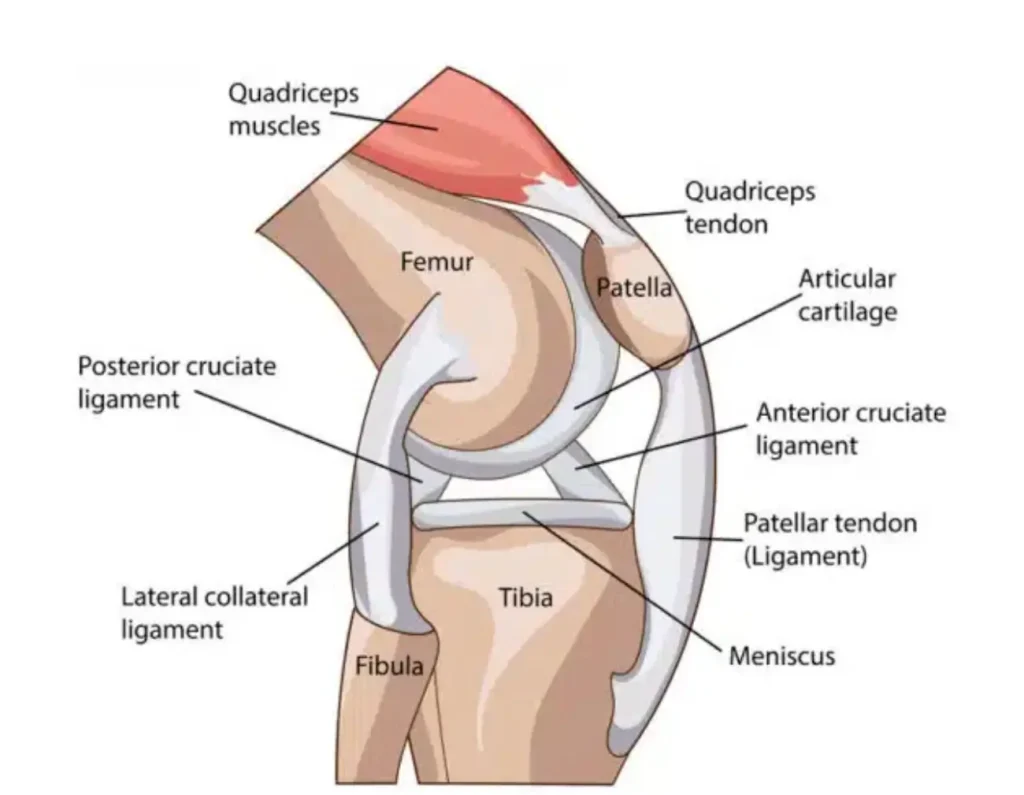
Four structures take the hit every time you go to the floor. The patella (kneecap) absorbs the initial shock on a straight-ahead dive. The medial collateral ligament on the inside of the knee and the lateral collateral ligament on the outside bear the load when you sprawl sideways for a tip play or collide with a teammate in a tight rotation. The patellar tendon, which connects your kneecap to your shinbone, absorbs cumulative stress every time you jump and land. Front-row players load it 80 to 120 times per match.
Low-profile pads like the Nike Essentials cover the patella and about an inch of surrounding area. Mid-length pads like the Mizuno LR6 extend that protection to the medial and lateral ligament zones. Full-coverage pads like the Mizuno T10 Plus wrap additional support around the upper tibia and provide compression to the muscles that stabilize the joint.
The infographic above maps each zone to the pad type that covers it. Match your position on the court to the zone that takes the most contact, and you’ll narrow your choice to two pads instead of five.
The one every team bag has: Nike Essentials
Nine out of ten club teams I’ve coached against in the past two seasons had at least three players wearing these. There’s a reason they’ve become the default.
The Nike Essentials run a low-profile design with EVA foam padding and a Dri-FIT lining (46% polyester, 25% nylon, 17% EVA, 12% rubber). That composition matters because the Dri-FIT layer wicks sweat away from the back of your knee, which is the spot where moisture buildup causes pads to slide during long tournament days. Most pads get slippery after two or three sets in a warm gym. The Essentials hold their position better than anything else I’ve tested at this weight.
The tradeoff is minimal side coverage. The padding sits directly over the patella and about an inch in each direction. If you’re a back-row player who goes to the floor at odd angles (hip-first slides, sprawling digs), you’ll occasionally catch bare knee on the court. For straight-ahead dives and controlled slides, the coverage is enough.
At under $25, the Essentials are the least expensive name-brand pad on this list and the easiest entry point for players outfitting themselves for the first time.
Who should buy these: Understanding the setter’s role in a 5-1 helps explain why this pad fits them so well — setters front-row rarely dive, and the low-profile Essentials stay out of the way during footwork patterns. Back-row passers who want mobility over maximum padding also do well here. These run small. If you measure between two sizes on the Nike chart, go up.
Who should skip these: Liberos logging 30+ digs per match and middle blockers absorbing repeated landing impact. You need more coverage.
The libero’s floor companion: Mizuno LR6
If the Nike Essentials are the popular pick, the Mizuno LR6 is the performance pick for defensive players. I wore Mizuno pads through most of my college career, and the LR6 line has only gotten better.
Two features separate the LR6 from the pack: the VS-1 padding system and the D.F. Cut (Dynamotion Fit). The VS-1 foam sits in the high-impact zone but resists compression-set better than standard EVA. That means the padding bounces back to its original thickness after repeated floor contact instead of slowly going flat over a season. The D.F. Cut shapes the pad to move with your knee rather than bunching at the joint crease when you bend deep into a defensive platform.
At 6.75 inches, the sleeve is about an inch and a half longer than the Nike Essentials. That extra length wraps lateral and medial coverage around the sides of the knee. When a libero sprawls sideways for a tip play, both sides of the knee hit the floor. The LR6 actually covers those contact points. The Essentials don’t.
The material blend (50% polyester, 22% rayon, 28% elastic) gives it a no-fold, low-rise fit that sits just below the kneecap without rolling. Players who’ve dealt with pads that bunch behind the knee after every rally know how much that matters.
Mizuno also makes an upgraded version: the LR6 Pro. The Pro swaps the single-density VS-1 foam for a tri-density zone system with lightweight energy-returning foam. In practice, that means the padding firmness varies across the knee. The center zone over the patella is denser for direct impact, while the edges are softer for comfort during lateral movement. The Pro also adds a non-slip grip texture on the inside of the sleeve (the original LR6 relies on the elastic fit alone to stay put) and ventilation channels behind the knee that help with airflow during long tournament days.
If you’re a starting libero or DS playing four to five matches on a tournament Saturday, the Pro’s ventilation and grip upgrades are worth it. The original LR6 starts creeping down after your third straight match in a hot gym because sweat loosens the elastic. The Pro’s interior grip holds position longer. If you’re playing two or three times a week in normal practice and weekend matches, the original LR6 does everything you need.
The standard LR6 runs in the same price range as the Nike Essentials. The LR6 Pro costs a few dollars more, and that gap is worth it if you’re playing four or five matches on a tournament Saturday where the grip and ventilation upgrades earn their keep.
Who should buy these: Liberos, defensive specialists, and any back-row player who goes to the floor frequently. Also strong for outside hitters in a 6-2 rotation where you’re playing full back-row defense. Go LR6 Pro if you’re competing in multi-match tournament formats.
The honest limitation: Both versions run small. Mizuno’s sizing chart is based on measuring five inches above the knee, not at the knee itself. Measure carefully or you’ll end up with pads that cut off circulation at the top of the sleeve.
The Pro also costs a few dollars more, and the recycled-material sleeve on the Pro version feels slightly different against the skin than the original. Some players prefer the original’s softer hand feel.
The front-row workhorse: Adidas Elite
Middle blockers and outside hitters face a different kind of knee stress than defensive players. You’re not diving to the floor 30 times a match. Instead, you’re jumping and landing on the same spot, set after set after set. That vertical impact accumulates. The patella and the tendons around it take the brunt of it.
A middle blocker position breakdown shows exactly why: middles jump on nearly every rally, often two or three times in a single sequence, and the landing force travels directly through the patellar tendon each time.
The Adidas Elite addresses this with a 7.5-inch sleeve (19 cm) and sculpted EVA padding (80% EVA, 15% elastane, 5% other) built with anatomical flex zones. Those flex zones are channels molded into the padding that let the pad bend at the knee without the foam compressing unevenly. When you land from a block and immediately load for another jump, the pad redistributes impact rather than bottoming out.
The seam-free construction (59% polyester, 23% ramie, 18% elastane) matters more than it sounds. Most knee pads have stitched seams running behind the knee where the sleeve joins the padding. Those seams create friction points during repetitive bending. The Adidas Elite eliminates that issue, which matters more for front-row players who are constantly cycling through jump-land-jump sequences than for defensive players who spend more time in a low, static ready position.
These typically run $5 to $10 more than the Nike Essentials or Mizuno LR6, which puts them in the mid-$30 range depending on size and color. For front-row players logging 80-plus jumps per match, the flex-zone padding justifies the step up.
Who should buy these: Middle blockers, opposite hitters, and outside hitters who prioritize landing cushion over dive protection. Also a solid choice for players who prefer slightly more knee coverage than the minimalist LR6 or Essentials.
The honest limitation: They’re noticeably longer and bulkier than the Nike or Mizuno low-profile pads. Some players, especially at the high school level, find the extra sleeve length distracting. If you’ve worn low-profile pads your whole career, the transition takes a few practices.
The approach and landing mechanics for spiking are worth reviewing alongside the pad choice — how you land off a swing has a direct effect on how much patellar tendon stress you’re accumulating per match.
The comeback pad: McDavid HEX
I’m including these for a specific player: the one coming back from a knee injury, dealing with patellar tendonitis, or carrying a bruise that makes every floor contact painful. This is the pad I wore for three months after I tweaked my knee in a practice scrimmage during my college years. My athletic trainer recommended it, and I understood why on the first rep.
McDavid’s HEX technology uses individual hexagonal closed-cell foam pads (9mm thick) that are bonded directly into the compression fabric. Each hex cell moves independently, so the pad conforms to your knee shape rather than sitting flat against it. The practical result is that impact gets distributed across a wider surface area. A standard EVA pad takes a hit at one point and transfers force through that point. The hex cells spread it outward.
The compression sleeve itself runs longer than any volleyball-specific pad on this list, providing warmth and light stability to the muscles around the knee joint. McDavid uses hDc moisture management technology in the fabric to counteract the extra heat that longer sleeves generate.
I’ll be direct: most healthy players don’t need this much padding. The extended sleeve adds weight and bulk that you’ll notice during quick lateral shuffles. But if you’re nursing something, or if you’re a player who pounds the floor harder than most (I’ve coached some liberos who hit the ground like they’re trying to break through it), the HEX earns its spot.
McDavid HEX pads sit at the higher end of this list, usually landing between $30 and $40 for a pair. That’s a fair price for what is essentially a compression sleeve with integrated impact foam. You’d pay more for a separate knee brace and a separate pad.
Who should buy these: Players recovering from knee injuries, players with chronic patellar tendon soreness, and anyone who wants maximum impact absorption regardless of added bulk.
The honest limitation: These are not volleyball-specific. They’re a multi-sport pad that works well for volleyball but lacks the position-specific engineering of the Mizuno or Adidas options. The sizing is also based on knee circumference (measured at the largest part of the kneecap with the leg bent at 45 degrees), which is a different measurement than what Nike or Mizuno uses. Double-check the McDavid chart before ordering.
The team-order reliable: Mizuno T10 Plus
When a club director asks me what to order for 14 players who all need pads before the season opener, I point them here. The T10 Plus is Mizuno’s full-coverage pad with a one-size-fits-most design (knee circumference 11″ to 15.5″) that solves the biggest headache of outfitting a team: not every player knows their knee pad size, and not every parent wants to figure it out.
The T10 Plus runs an approximately 9-inch sleeve with five separate contoured padded sections and wrap panels that cover the medial and lateral sides of the knee. The material (68% polyester, 20% rayon, 12% elastic) is thicker and more structured than the LR6, which is why it provides more coverage but less of that “barely there” feel experienced players prefer.
For beginners, that extra coverage builds confidence. I’ve seen first-year players commit to digs they would have pulled up on because the T10 Plus makes the floor feel less threatening. That confidence translates to faster skill development. Once a player stops worrying about their knees, their defensive footwork improves because they’re actually finishing the movement instead of bailing out early.
At around $20 to $25 per pair, the T10 Plus is the best value for team orders. Multiply that across 14 players and a club director is spending roughly the cost of two tournament entry fees to outfit the entire roster.
Who should buy these: First-year players, youth programs buying in bulk, and any player who wants maximum coverage in a one-size option. Also a good fit for players with larger legs who struggle to find sized pads that don’t squeeze.
The honest limitation: These are hand-wash only and shouldn’t go in direct sunlight for drying. For a team that’s cycling through two-a-days during preseason, the maintenance is a pain compared to the machine-washable Nike or Mizuno LR6. Also, experienced players will find them too bulky for competitive match play.
How to pick the right knee pad for your position
The comparison table above routes you to a starting point, but the decision gets more specific once you factor in your position and play style.
Defensive players (liberos, DS, back-row specialists)
You’re hitting the floor more than anyone else on the court. The average libero in a competitive high school or club match makes contact with the floor 20 to 40 times across a five-set match, between digs, sprawls, pancakes, and controlled rolls. Your primary concern isn’t padding thickness. It’s friction burn prevention and lateral coverage.
Low-profile pads like the Mizuno LR6 win here because they cover the three contact points that actually hit the floor: the patella, the medial side of the knee (inside), and the lateral side (outside). You don’t need a 9-inch sleeve wrapping halfway up your thigh. You need a pad that stays in position through repeated floor contact without riding up or bunching.
Mastering the dig starts with committing fully to the floor. Pads that slide or go flat mid-match pull you out of that commitment faster than anything a coach can say.
Front-row players (middles, outsides, opposites)
Your knee stress is vertical, not horizontal. Blocking and hitting require repeated jumping and landing, and the force travels through the patellar tendon on each landing. Over a full match, a middle blocker who jumps on every rally can log 80 to 120 jumps. That’s not dive impact. That’s cumulative landing shock.
The Adidas Elite or the McDavid HEX work here because they distribute landing force across a wider area and provide light compression that supports the tendon during repeated loading. The longer sleeve length that defensive players find excessive actually helps front-row players by stabilizing the muscles around the knee joint between jumps. Understanding blocking technique and footwork makes it easier to see why — the load-jump-land cycle repeats so frequently that knee protection becomes a fatigue management tool as much as an injury prevention one.
Setters
In a standard 5-1, you’re front-row for three rotations and back-row for three. When you’re front-row, you’re rarely diving. When you’re back-row, you’re occasionally digging but spending most of your energy getting to the target position for the set. Minimal padding is usually fine.
The Nike Essentials are the default setter pad. Light, low-profile, won’t interfere with the footwork patterns you run to get into setting position. If you’re running a 6-2 and playing full back-row defense, consider the Mizuno LR6 for the added lateral coverage.
Beginners and young players
Thick padding builds confidence faster than any drill. A player who’s afraid of the floor won’t develop defensive skills, period. The Mizuno T10 Plus gives first-year players enough cushion to commit fully to their first digs and dives without flinching. Once their technique develops and they learn to absorb floor contact with proper body mechanics, they can transition to a lower-profile pad.
When to replace your knee pads
Knee pads don’t last forever, and most players hold onto them too long. Here’s a quick test I teach my players:
Press your thumb firmly into the center of the padding where your kneecap sits. Hold for three seconds, then release. If the foam springs back to its original shape within two to three seconds, the padding still has life. If the indent stays, or the foam feels dense and flat instead of springy, the shock absorption is gone.
For players practicing or competing three to five times per week, most pads last 6 to 12 months before the foam loses its rebound. Recreational players who play once or twice a week can stretch that to 18 months. Either way, proper washing extends pad life significantly. Machine-drying and harsh detergents break down EVA foam faster than floor contact does.
How to measure for the right size
Every brand on this list uses a slightly different sizing method, which is the single biggest source of returns for volleyball knee pads. Here’s the process that works across brands:
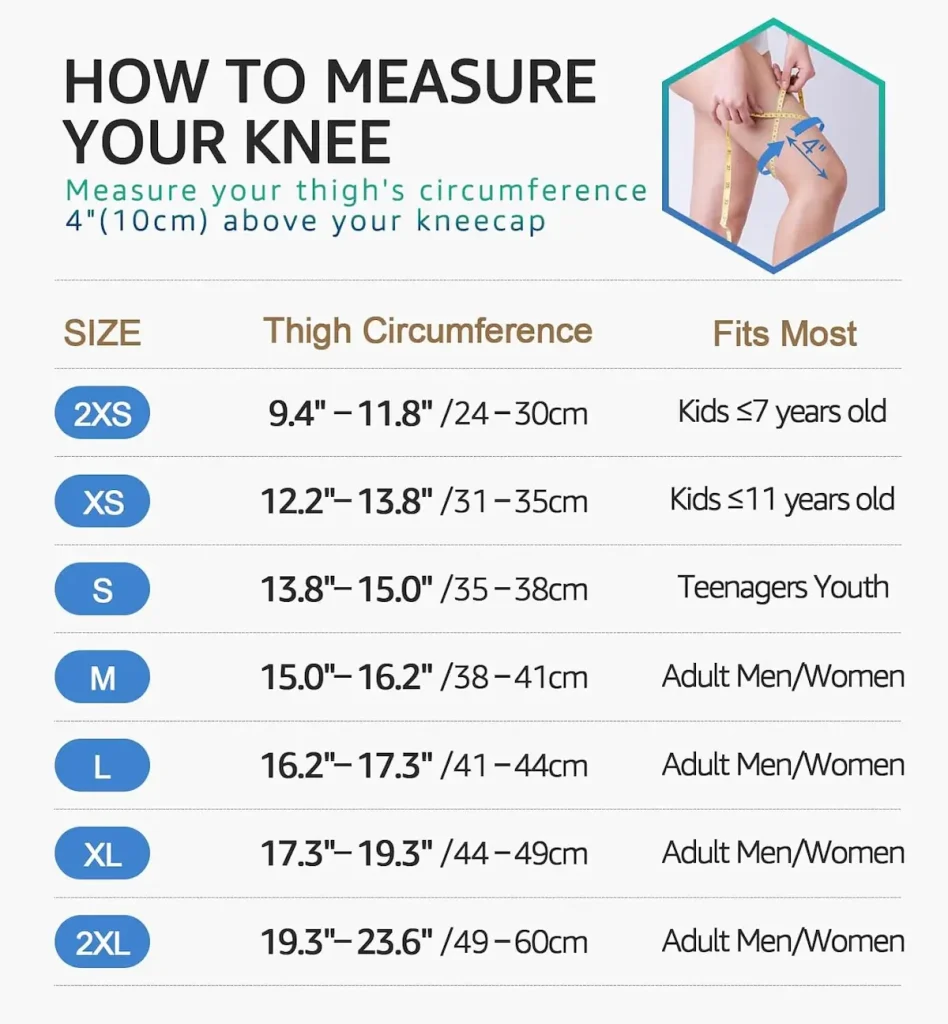
Stand up and slightly bend your knee (about 20 degrees). Wrap a flexible measuring tape around your leg five inches above the center of your kneecap. That circumference measurement maps to the brand’s size chart.
Two things most players get wrong: they measure with their leg fully straight (which gives a smaller circumference than your leg at playing position), or they measure at the knee itself instead of above it.
If you land between two sizes, go with the smaller one for a snug compression fit. A pad that’s slightly tight will break in and hold position better than one that’s slightly loose and slides down every few rallies.
FAQs
What knee pads do liberos wear?
Most competitive liberos wear either the Nike Essentials or the Mizuno LR6. The LR6 is the better choice for liberos who make frequent floor contact because its VS-1 padding resists going flat over the season and the 6.75-inch sleeve covers the lateral knee areas that hit the floor during sprawling digs. Tournament liberos who play four or five matches in a day should consider the LR6 Pro for its interior grip and ventilation upgrades.
Are thick or thin knee pads better for volleyball?
Thin pads prevent friction burns while keeping you mobile. Thick pads absorb more landing shock but add weight and bulk. Defensive players generally prefer thin, low-profile pads. Front-row players and beginners benefit from thicker options. There’s no single right answer because position demands are different.
Can I use basketball knee pads for volleyball?
You can, and some players do (the McDavid HEX is technically a multi-sport pad). Basketball pads tend to run longer and heavier than volleyball-specific designs because basketball involves more body-to-body contact. For volleyball, that extra material can feel excessive during lateral shuffles and quick defensive transitions. If you already own basketball pads and they’re comfortable, they’ll protect your knees. But volleyball-specific pads like the Mizuno LR6 or Nike Essentials are engineered for the specific movements volleyball demands.
How do I stop my knee pads from sliding down?
Two fixes. First, make sure you’re wearing the right size. A pad that slides is almost always too loose. Second, pull the pad up slightly higher than where you think it should sit. During play, gravity and sweat will settle it into position. If you pull it to the exact spot you want it at rest, it’ll be below that spot within two rallies.
For footwear that works alongside the right protective gear, the complete volleyball shoe guide covers what to look for at every level of play.