Volleyball Guides From Backyard Basics to Varsity Tactics
I’m Ryan Walker. I played outside hitter in high school and college, I coach club, high school and rec players, and I write every guide on this site. Whether you’re learning your first bump or running a 5-1, each guide comes from time on the court and is checked against the FIVB, NCAA, NFHS and USAV rulebooks.
Browse All GuidesDig deep, set high, spike hard – the volleyball player’s mantra.

30 Years on the Court, as a Player and a Coach
Here’s the experience behind every guide on this site.
Backyard to high school – Learned the game on backyard nets with my siblings, then played outside hitter (zone 4) in high school.
State titleWon the boys’ club state final in five sets, 16-14 in the fifth after facing match point.
College on scholarshipReached the quarterfinals of the National Collegiate Championship and won the Intercollegiate Tournament in my senior year.
International play in EuropeA summer tournament with my college team, and my first look at how differently other countries run their offense and defense.
Coaching and writingI still coach a few times a week, and I turn 30+ years of playing and coaching into these guides.
Most-Read Guides This Month


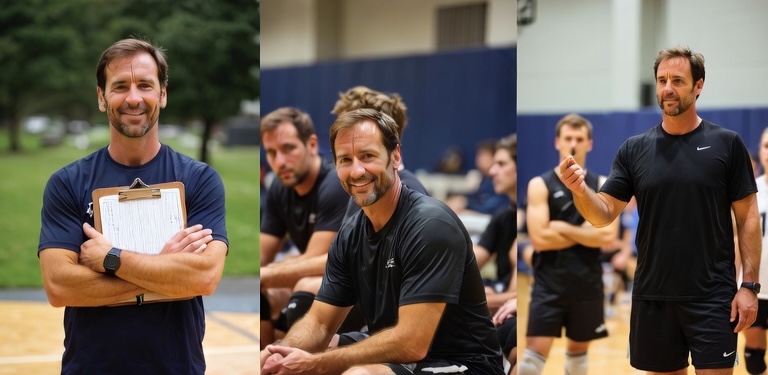
Get to know Me
Meet Coach Ryan
I’ve been on the court for more than 30 years. I played outside hitter through high school and college on a scholarship, won our boys’ club state final in five sets, and played a summer tournament in Europe with my college team. Since then I’ve coached club, high school and rec players, and I still coach a few times a week.
These days, I bring that court experience to PlayingVolley.com. Every guide I write is grounded in official FIVB, NCAA, and USAV standards — because I’ve seen what happens when players train on bad information. My day job is in IT networking, so I break rotations, scoring and technique down the way I’d troubleshoot a network: step by step, looking for the point where it fails.
If you want to understand the game and not just play it, start with any guide below.
Minnesota High School Invitational
Great Lakes Regional Championship
Twin Cities Volleyball Classic
Intercollegiate Volleyball Tournament
Step by Step
Guides for Every Level
Whether you’re learning to pass or perfecting your 5-1 rotation — find the guide that matches where you are right now.
Feedback and opinions
What Players and Coaches Say
From club parents to varsity coaches — here’s how PlayingVolley guides are making a difference on the court.

Jasper
Coach
I recommend PlayingVolley to my players before every new unit.
Ryan’s scoring and rules guides are the clearest breakdowns I’ve found anywhere — they match FIVB and NFHS standards, which saves me from correcting bad information the kids pick up from random YouTube videos.

Jenny
The Club Parent
My daughter made her first club team this year, and I had no idea what a libero was or why rotations mattered. Ryan’s position guides broke it all down without making me feel stupid. Now I actually understand what’s happening on the court — and my kid thinks I’m cool for knowing what a 5-1 rotation is.

Burly
Player
Ryan’s spiking guide explained the 3-step approach in a way that made this site as my go-to resource.
This site is top on my recommendations list of Volleyball resources.
Where to start
Browse 50+ free guides covering every part of the game. See All Guides →