I wore basketball shoes to my first Minnesota High School Invitational match. Not on purpose – I just didn’t know better. My coach didn’t say anything during warm-ups, but after we dropped the first set (slower lateral coverage than the other team, two ankles nearly rolling on fast transitions), he pulled me aside and handed me a pair of proper volleyball shoes. “You can’t play a fast game in slow shoes.” I wore them for the second set. Different game entirely.
That lesson stuck with me through high school, college, and years of coaching since. The right shoe doesn’t make you a better volleyball player, but the wrong one absolutely makes you worse. After testing and training in more than 20 different models over the years, I narrowed this guide to the five best volleyball shoes I’d recommend to any player walking into a season – from first-year club players to college-level competitors. If you’re still sorting out where each player stands on the court, your shoes need to match that role.
Each shoe below gets a position-specific breakdown, honest limitations, and the technical details that matter on court. The buying guide at the end connects shoe features to actual playing positions, because a libero and a middle blocker need fundamentally different things from their footwear.
This article contains affiliate links. If you buy through one of these links, PlayingVolley.com may earn a small commission at no extra cost to you. Every shoe in this guide was selected based on real court testing and coaching experience – our recommendations are never influenced by commissions.
Quick Comparison: 5 Best Volleyball Shoes (2026)
| Shoe | Best For | Outsole Type | Wide Feet? | Price |
|---|---|---|---|---|
| Nike Zoom Hyperset 2 | All-around play | Multi-directional patterned grooves | Size up – runs narrow | $135 |
| ASICS Gel-Rocket 12 | Budget-conscious players | Flex rubber with TRUSSTIC system | Yes (wide sizes available) | ~$75–$80 |
| Mizuno Wave Momentum 3 | Comfort and durability | XG rubber multi-directional grooves | Not ideal – runs narrow | $130–$160 |
| ASICS Sky Elite FF3 | High-jumping front-row players | Multi-directional grip | Not ideal – narrow toe box | $115–$140 |
| Way of Wade 11 | Heavy-traffic court players | GCU orbital groove system | Fits well – size up if high instep | ~$225 |
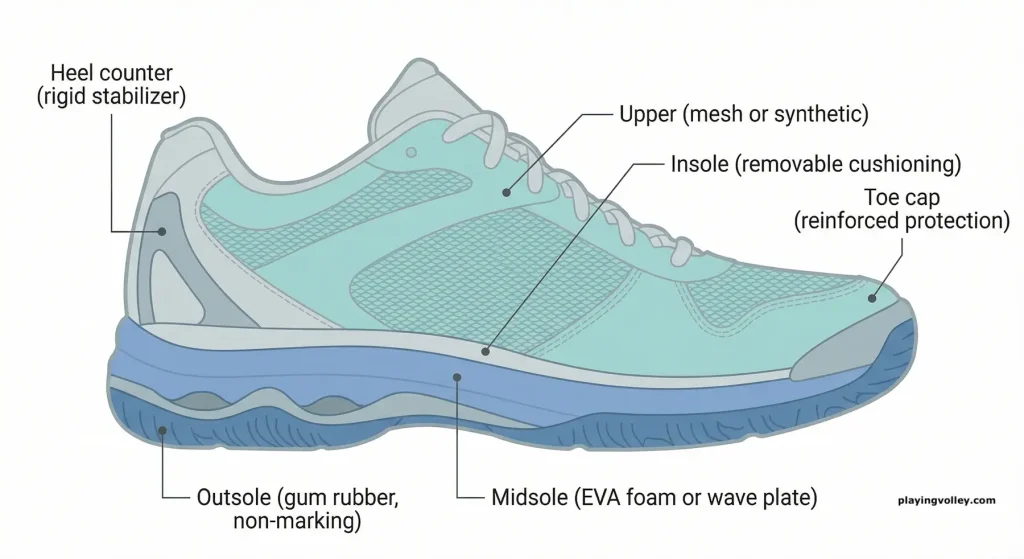
All five shoes use non-marking gum rubber outsoles, which is a requirement on virtually every indoor volleyball court. If a shoe leaves black streaks on hardwood, it’s not allowed in the court.
1. Nike Zoom Hyperset 2 – Best All-Around
When I finally got a proper volleyball shoe budget in college, the Nike Hyperset line was what my teammates swore by. The Hyperset 2 builds on that same foundation with a few meaningful upgrades.
The fit is the first thing you notice. Flywire cables run alongside the lacing system, which means the shoe wraps and locks around your midfoot rather than just squeezing it. For outside hitters making repeated angle cuts – zone 4 to zone 1 diagonal coverage, then back to base – that kind of held-in stability stops the micro-slippage that causes blisters and ankle fatigue over a full tournament day.
The forefoot Air Zoom unit is where this shoe earns its spot at the top of the list. It compresses on landing and returns energy fast, which matters most during blocking sequences where you’re absorbing impact and immediately resetting lateral position. The sensation is springy rather than soft – you feel propulsion, not cushion. Nike React foam in the midsole handles the rest of the impact absorption.
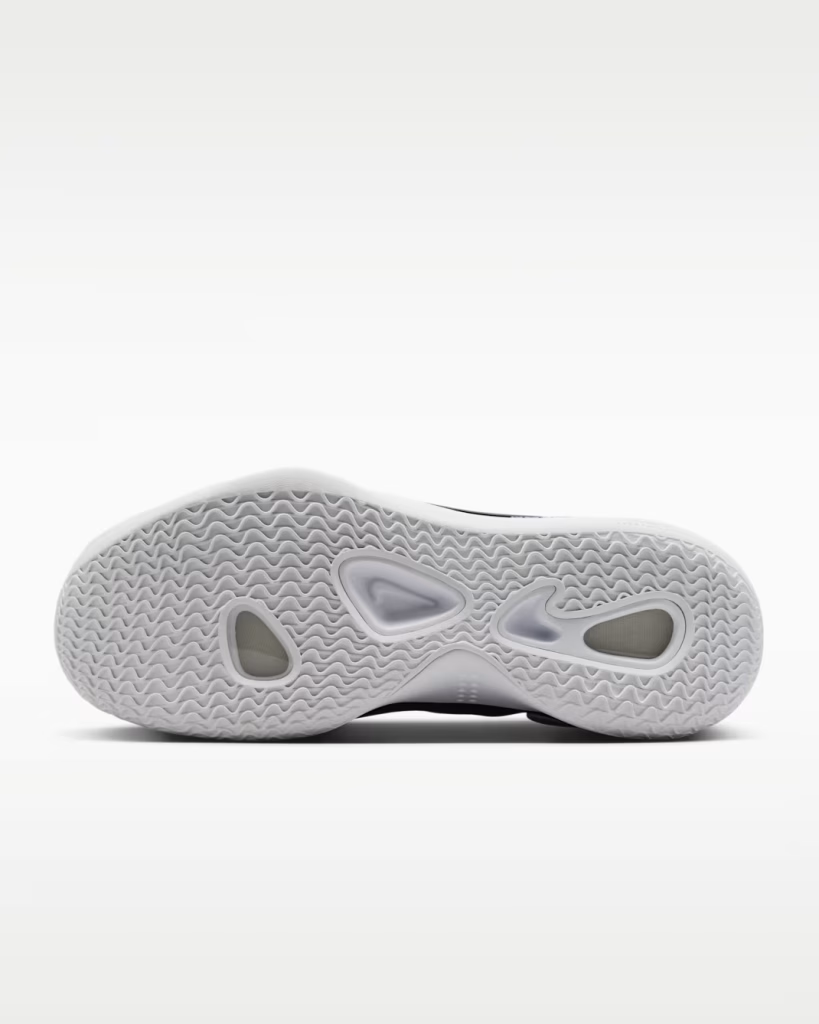
The outsole uses a multi-directional patterned groove system with four void sections that create suction against hardwood. The non-marking rubber compound grips polished floors without leaving marks – you won’t get called out by a gym manager, and you won’t slip during a sprint to cover a tip shot.
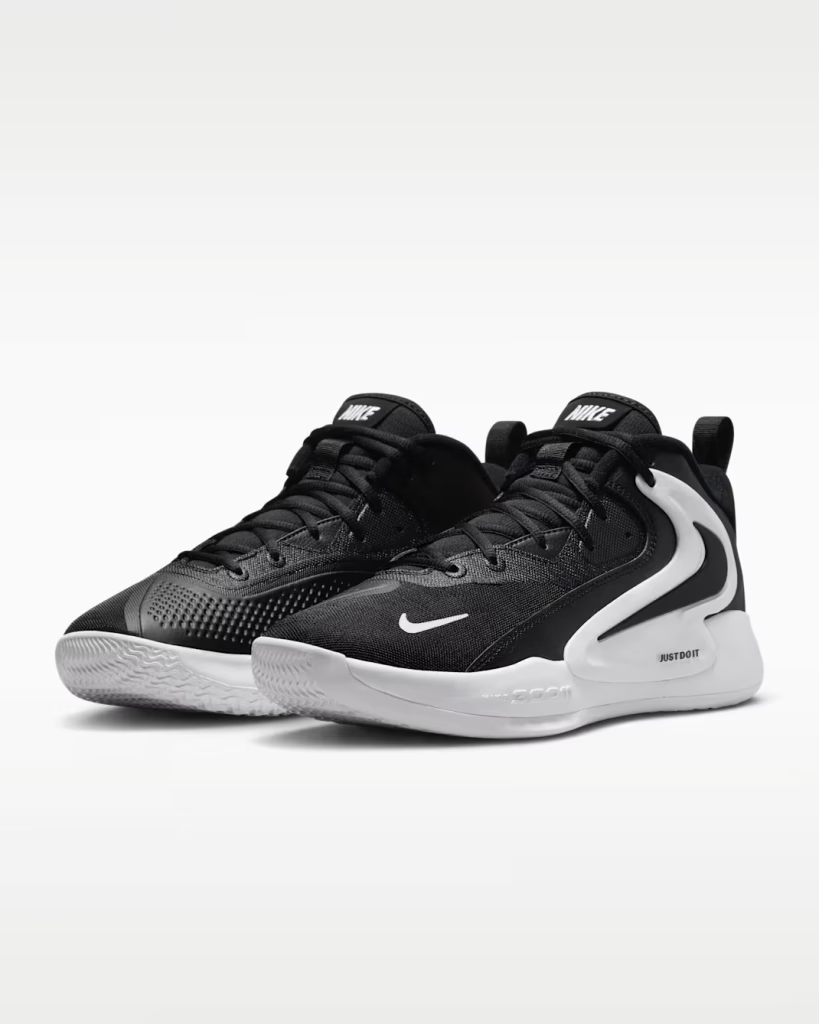
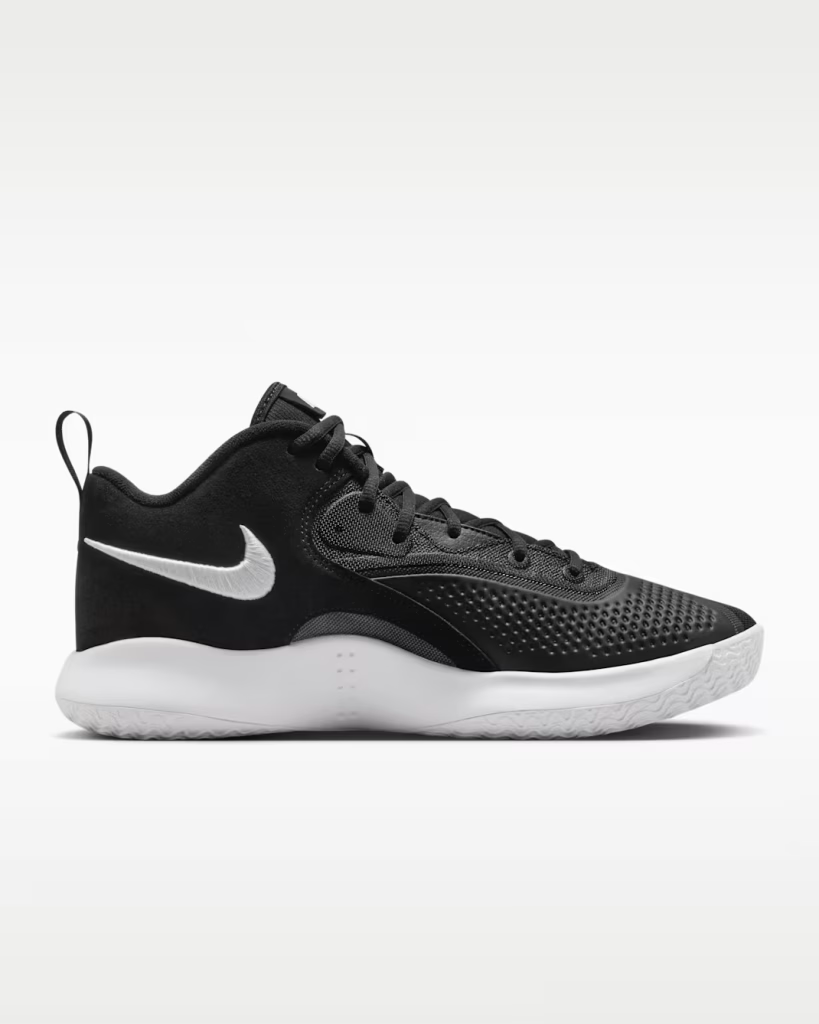
Who this is for: Versatile players who rotate through multiple responsibilities during a match. Outside hitters and defensive specialists get the most out of the lateral stability. Liberos benefit from the relatively lightweight feel. The mid-to-high collar gives blockers and middle hitters decent ankle coverage for confident landings from max-height contacts.
One honest limitation: The toe box runs narrow. If you have wide feet, go a half size up before your first practice - don't wait for blisters to tell you. Nike themselves recommend sizing up based on customer feedback.
Wide-feet alternative: If the narrow Hyperset 2 toe box is a dealbreaker, look at the Nike HyperAce 3 (~$125). It finally fixed the toe-box room issue that plagued Nike volleyball shoes for years, runs a lighter and lower-profile build, and uses the same Air Zoom cushioning. The tradeoff is less ankle collar support than the Hyperset 2 – the HyperAce 3 sits lower. For liberos and defensive specialists who want Nike’s responsiveness with a roomier fit, it’s the better pick.
Available in men’s (3.5–9.5) and women’s (5–11) sizing, with 4 colorways on Nike.com (also Amazon).
Comfort: 4/5 | Traction: 4/5 | Lateral Stability: 4/5
Check price on Amazon2. ASICS Gel-Rocket 12 – Best Budget Option
The Gel-Rocket line has been the default recommendation for high school programs on tight equipment budgets for years. The 12th generation keeps the formula that works and tightens up the construction where it counts.
ASICS’s GEL technology sits in the heel midsole – a shock-absorbing insert that softens the impact from high jumps and hard lateral cuts. This isn’t just about comfort. It affects knee and ankle joint load over the course of a long practice or multi-match tournament day. Players who run more dig-heavy defensive roles – lots of floor contact, low postures, recovering quickly – put significant cumulative stress on those joints. The GEL cushioning absorbs a meaningful portion of that impact before it reaches your body.
The TRUSSTIC system is the other piece of tech that earns its mention. It’s a structural reinforcement along the midfoot arch that resists over-twisting when you push off hard on lateral cuts. Without it, cheaper shoes flex in ways that transfer strain to the ankle. With TRUSSTIC, the energy you generate on a crossover step actually pushes you laterally instead of dissipating through the shoe sole.
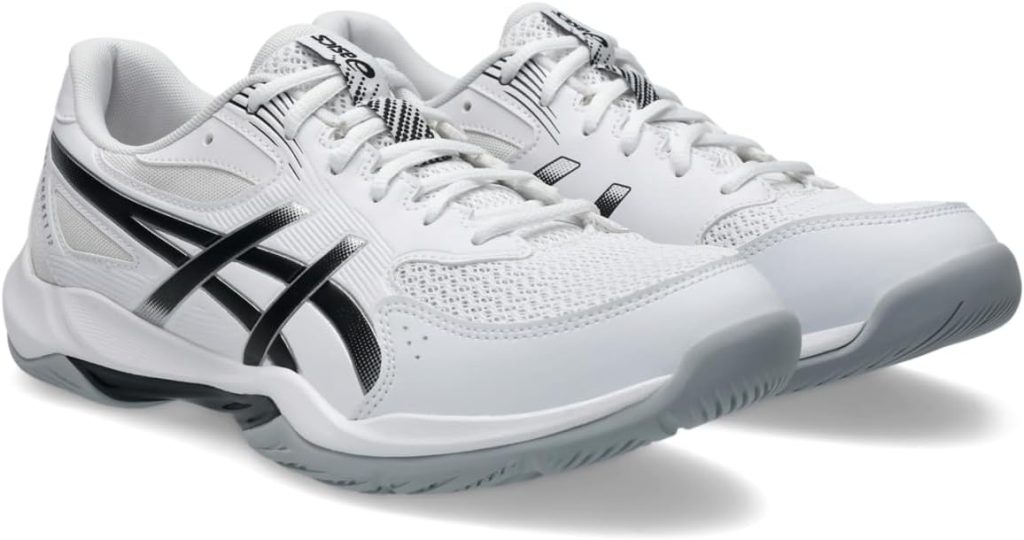
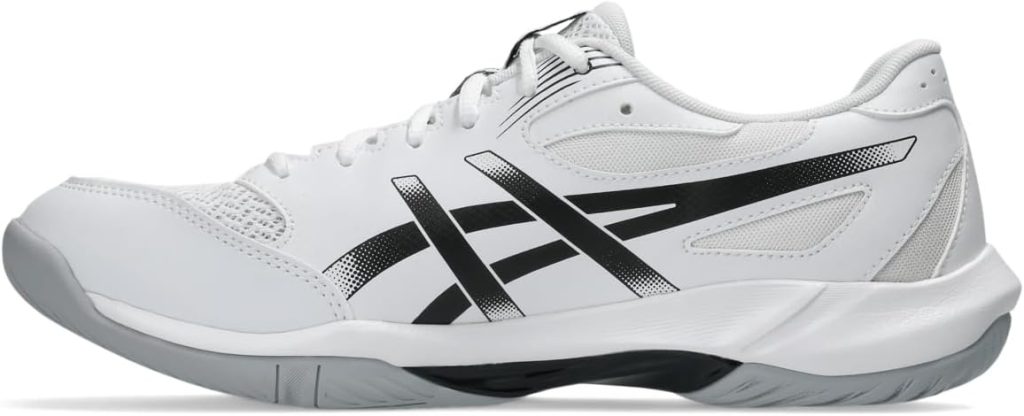
For around $75–$80, that’s a serious amount of functional technology for the price.
Who this is for: High school players, recreational adult league players, coaches on limited equipment budgets, and any player returning from a lower-leg injury who needs proven cushioning without spending $200. The wide-size option makes this one of the few volleyball shoes genuinely accessible to players who usually struggle to find court shoes that fit.
Sizing runs from 6 to 15, including dedicated wide widths. One note: they run snug for the first few sessions. Plan for a short break-in period before wearing them to a match.
The Gel-Rocket 12 doesn’t have the explosive energy return of higher-priced shoes. If you’re a front-row attacker logging 50+ jumps per match, you’ll feel the difference. But for back-row play, setting, and general court coverage, this shoe punches well above its price.
Comfort: 5/5 | Traction: 4/5 | Lateral Stability: 5/5
Check price on AmazonMost competitive players burn through a pair per season. If you’re wondering how many months you can realistically get from your shoes, court hours per week and playing surface matter more than brand.
3. Mizuno Wave Momentum 3 – Best for Comfort
Mizuno has been building volleyball-specific footwear longer than most brands in this category, and the Wave Momentum line shows that accumulated design knowledge in every component.
The WAVE plate is the standout feature. It’s a propulsion plate embedded in the midsole that distributes impact energy across a wide surface area rather than concentrating it at the heel or ball of the foot.
For players on court multiple days per week – tournament weekends, back-to-back practices – that energy distribution translates to less cumulative fatigue in your knees and ankles. It also creates a stable push-off platform, which setters and outside hitters who depend on consistent jump mechanics will notice immediately.
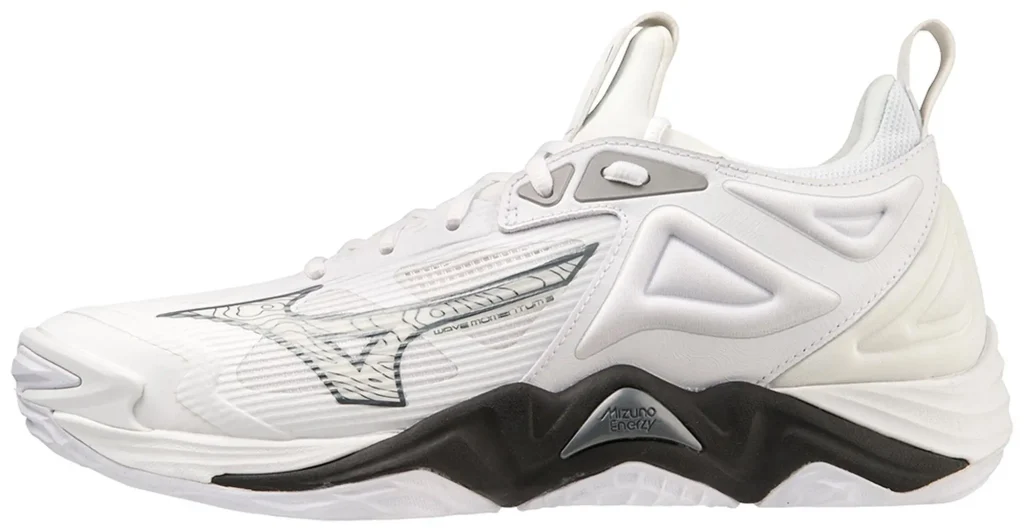
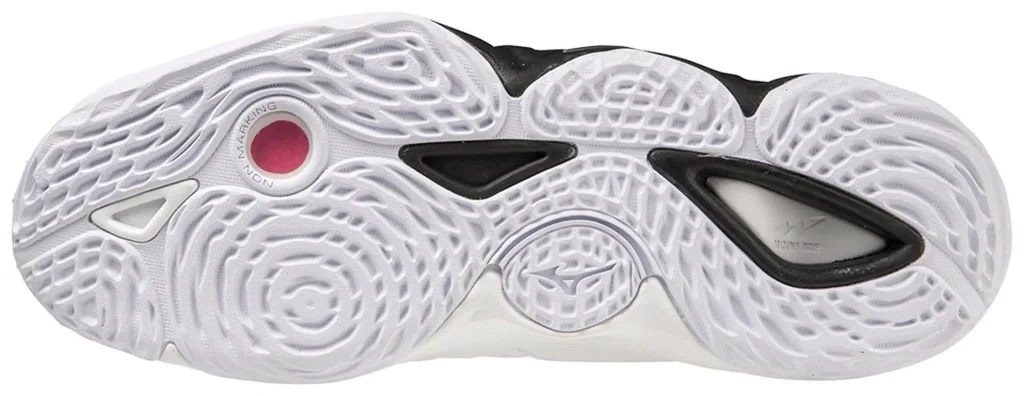
ENERGY FOAM in the midsole manages the balance between softness and rebound. Too soft, and the shoe feels unstable on lateral cuts. Too firm, and long sessions wear down your legs faster. Mizuno lands in the middle well here – the shoe feels controlled rather than mushy.
The DuraSHIELD on the toe caps adds real longevity value. Most volleyball shoes show their age first at the toe from floor contact during digs and low defensive postures. The reinforced toe cap on the Momentum 3 holds up noticeably better than competitors at this price point, which matters when you’re investing $130–$160.
XG (Extra-Grade) rubber on the outsole handles multi-directional traction. The round groove pattern creates air voids for grip on smooth hardwood without marking the surface.
Who this is for: Players with high weekly court time – college athletes, club players in competitive adult divisions, coaches who demonstrate technique regularly. The comfort advantage compounds over hours, not minutes. If you play 10+ hours per week, this shoe’s fatigue reduction pays for itself.
Not ideal for wide feet. The toe box is narrow, and the DynamotionFit bootie construction hugs closely. Medium-to-narrow foot shapes benefit most. Eight color options, all running clean rather than flashy.
Comfort: 4/5 | Traction: 4/5 | Lateral Stability: 5/5
Check price on Amazon4. ASICS Sky Elite FlyteFoam FF3 – Best for High-Jumping Players
Another ASICS entry, but serving a completely different purpose than the Gel-Rocket. The Sky Elite FF3 is built around vertical power – getting off the ground faster, staying up longer, and landing without jarring your joints.
The FF BLAST cushioning in the midsole provides a bouncier, more responsive ride than the GEL system in the Gel-Rocket. Where the Gel-Rocket absorbs and dampens, the FF3 absorbs and returns. For players whose game depends on repeated max-effort jumps – outside hitters attacking in transition, middle blockers running quick sets – that energy return adds up over a match.
ASICS’s RISETRUSS technology helps transition horizontal approach speed into vertical launch power without losing energy in the conversion. Think of your hitting approach: you sprint forward, plant, and redirect upward. The shoe’s structural design channels that momentum change efficiently rather than letting it leak sideways through the sole.
The curved heel shape is a design detail that most competitors ignore. It smooths out the heel-to-toe transition during approach footwork, so your last two steps before a jump feel seamless rather than clunky. I found my approach timing more consistent in the FF3 than in flat-heeled alternatives during testing.
The Energy Lock mesh system holds your foot in place from takeoff through landing. Combined with the curved heel, landings feel steady rather than jarring.
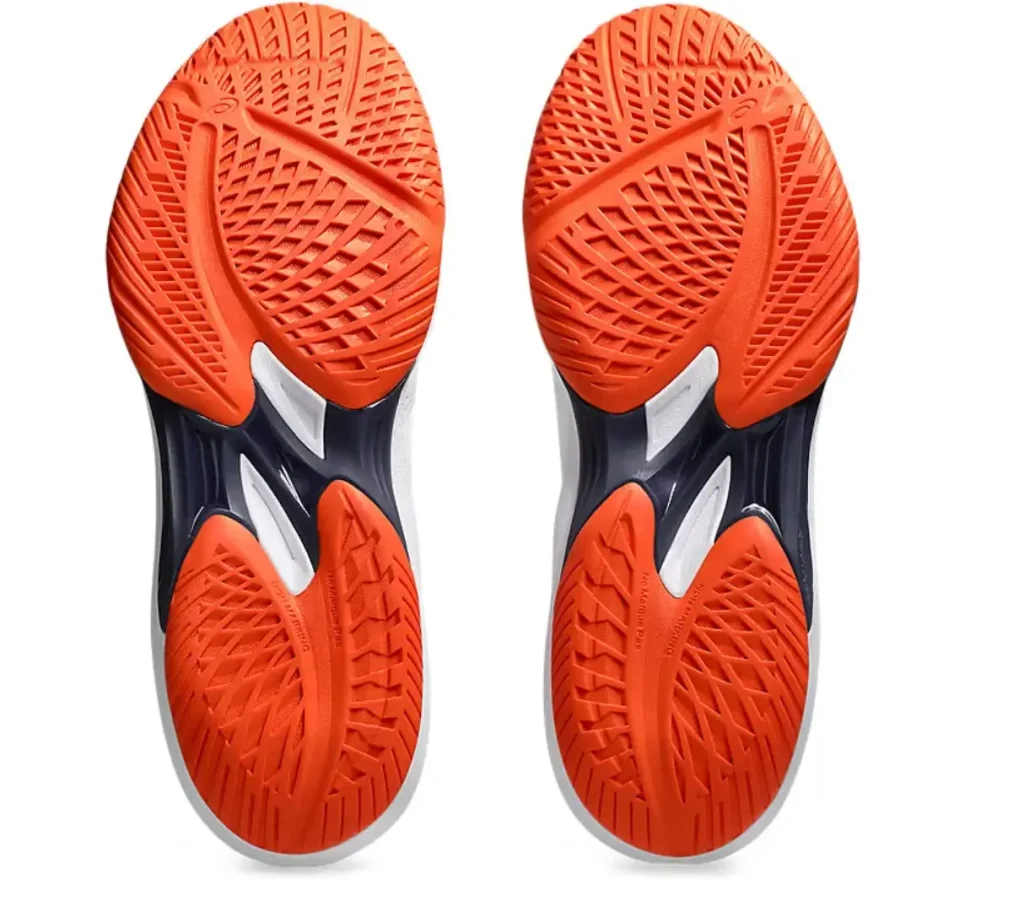
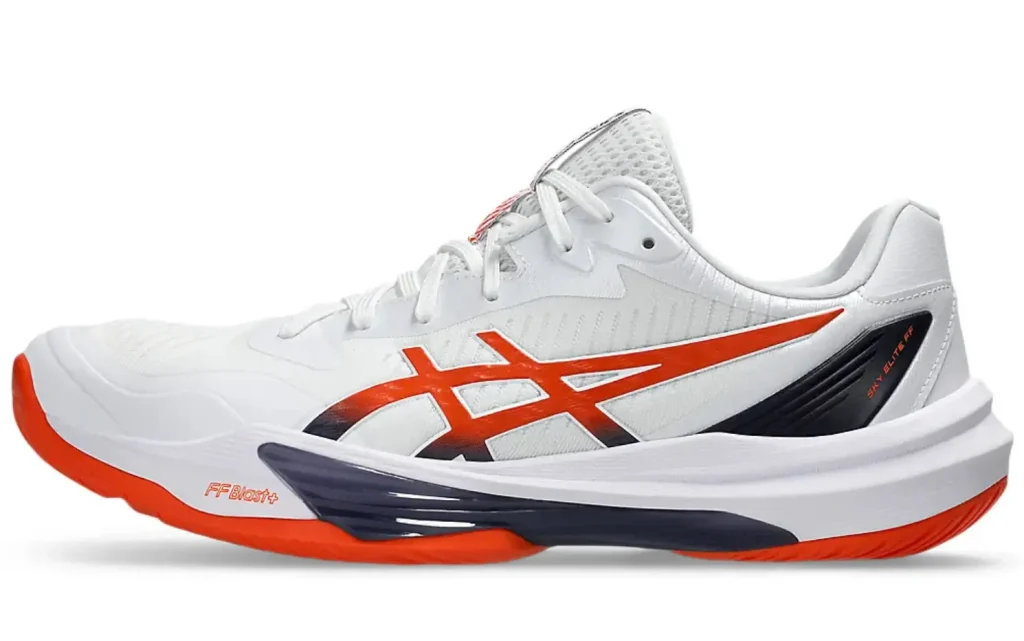
Who this is for: Front-row attackers – outside hitters, opposite hitters, and middle blockers who are jumping 30-50+ times per match. The vertical power advantage is real and measurable. Setters who jump-set frequently will also appreciate the responsive cushioning.
Not the right shoe for liberos or back-row specialists. The design priorities (vertical bounce, high-top ankle support) add weight and reduce the low-to-ground agility that defensive players need.
Narrow toe box – same as many performance-tier shoes. Players with wide feet should try before buying or size up.
Men’s sizes 6–16, women’s 6–14. Multiple colorway options in both lines, with pricing ranging $115–$140 depending on style.
Comfort: 4/5 | Traction: 4/5 | Lateral Stability: 4/5
Check price on Amazon5. Way of Wade 11 – Best Traction for Heavy Court Traffic
Full disclosure: this shoe was designed for basketball.
The Way of Wade line is Dwyane Wade’s signature series with Li-Ning, built for NBA-level indoor court play. But the crossover to volleyball is legitimate, and a growing number of competitive players are making the switch – the shoe even appeared on WearTesters’ list of top basketball shoes that work on a volleyball court.
Here’s why it works: The CARBON CORE DRIVE SYSTEM places a carbon fiber plate between two layers of BOOM midsole cushioning. That plate provides torsional rigidity (your foot doesn’t twist under load) while the foam layers handle impact absorption above and below. The result is a shoe that feels light and explosive despite having more structural support than most volleyball-specific options.
The GCU (Ground Control Unit) outsole is the real differentiator. Way of Wade claims this rubber compound lasts 4–5 times longer than standard outsole rubber, and in my testing, the grip quality holds up far longer than other shoes I’ve worn through full seasons.
The outsole pattern uses a parametric orbital groove design – no traditional herringbone or radial pattern. The circular geometry handles multi-directional cutting forces differently, distributing grip across the full contact patch rather than favoring one movement direction.
The EVA frame carrier and TPU heel counter add stability during hard direction changes. Leather upper panels (a shift from Way of Wade’s older textile builds) add durability and a locked-in feel that improves with break-in.
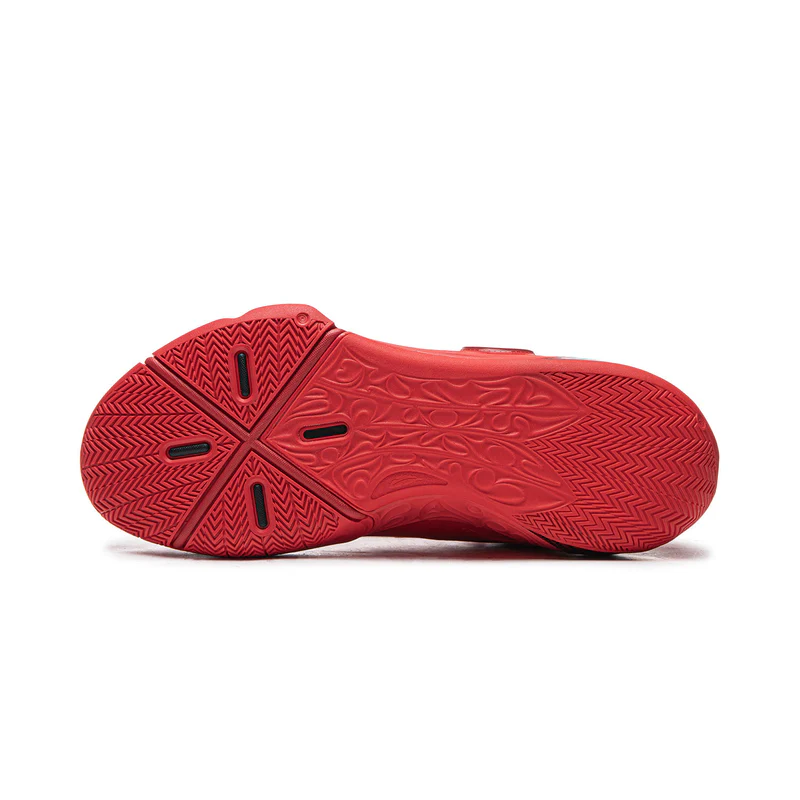
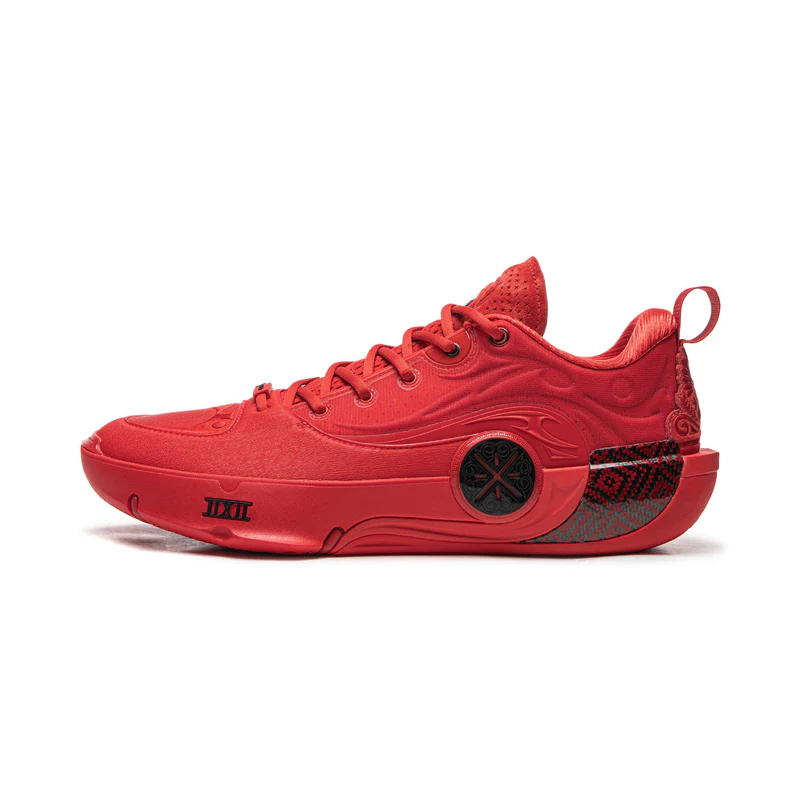
Who this is for: Players who log heavy court hours across multiple positions and need outsole grip that survives an entire season. Defensive specialists and all-around back-row players who make constant directional changes benefit from the traction longevity. Middle blockers who want both lateral stability and vertical responsiveness will find the carbon plate system effective.
The basketball-to-volleyball tradeoff: The Wade 11 weighs more than a typical volleyball-specific shoe. If you're a libero who needs the lightest, lowest-profile option possible, the extra weight will slow you down. For front-row players and all-around athletes, the weight is offset by the superior traction and cushioning.
Break-in warning: The leather upper and carbon plate system need 3-4 sessions to conform to your foot. Don’t wear these fresh out of the box for a tournament – the stiffness will cause foot cramps by the second set. Break them in during practices first, then bring them to match day.
Pricing sits around $225. That’s higher than most volleyball shoes, but the durability often means one pair lasts what two pairs of cheaper shoes would.
Comfort: 5/5 | Traction: 5/5 | Lateral Stability: 5/5
How to Choose Volleyball Shoes by Position
Most buying guides list generic categories – weight, cushioning, traction – without explaining which ones matter for your specific role on court. Here’s how shoe features connect to what you actually do during a match.
Setters
Setters need quick lateral transitions and consistent footwork for jump-setting. Low-to-mid cut shoes give you the ankle mobility to stay nimble. Responsive cushioning (like FF BLAST or Air Zoom) helps with repeated low-to-moderate jumps. Lightweight construction matters because setters cover more court distance per rally than any other position.
The Nike Hyperset 2 and Mizuno Wave Momentum 3 both work well here.
Outside Hitters and Opposite Hitters
At these positions, your shoe handles the widest range of demands: explosive approach jumps, hard lateral cuts in serve-receive, and transition defense. Thus, you need strong lateral stability, responsive vertical cushioning, and a sole pattern that grips during multi-directional movement.
The ASICS Sky Elite FF3 is purpose-built for this. The Nike Hyperset 2 is the versatile alternative if you also carry heavy defensive responsibilities.
Middle Blockers
Middles jump more frequently than any other position – blocking attempts on nearly every opposition attack, plus quick-set opportunities on offense. Vertical responsiveness and ankle support take priority. High-top or mid-top cuts protect against the ankle rolls that come from repeated off-balance landings.
The ASICS Sky Elite FF3 handles this workload well. The Way of Wade 11, with its carbon-plated midsole, is a strong alternative for middles who also need traction longevity.
Liberos and Defensive Specialists
Liberos stay low, move fast, and rarely jump above net height. You need lightweight shoes with low-cut profiles for maximum ankle mobility, strong lateral stability for hard defensive cuts, and cushioning that handles repeated floor contact from diving and sprawling. Thick-soled, high-top shoes will slow you down.
The ASICS Gel-Rocket 12 (affordable, wide sizes, excellent lateral support) and the Nike Hyperset 2 (lightweight, responsive grip) are the two best options here.
Buying Guide: What Actually Matters
Weight
Men’s volleyball shoes typically weigh 10-14 oz. Women’s models run 7-11 oz. The Mizuno Wave Lightning Neo 3 – Mizuno’s lightest volleyball shoe in 2026 – uses ENERZY NXT foam in the midsole and weighs approximately 8.5 oz for a men’s size 9, sitting at the lighter extreme of the range. Heavier shoes (13+ oz) usually trade weight for more cushioning or ankle support. If your position demands constant sprinting and directional changes, lighter shoes reduce fatigue. If you’re absorbing repeated jumping impacts, the extra ounces of cushioning material protect your joints.
Traction and Outsole Patterns
Every shoe in this guide uses non-marking gum rubber. Beyond that base requirement, the groove pattern affects which movements the shoe handles best:
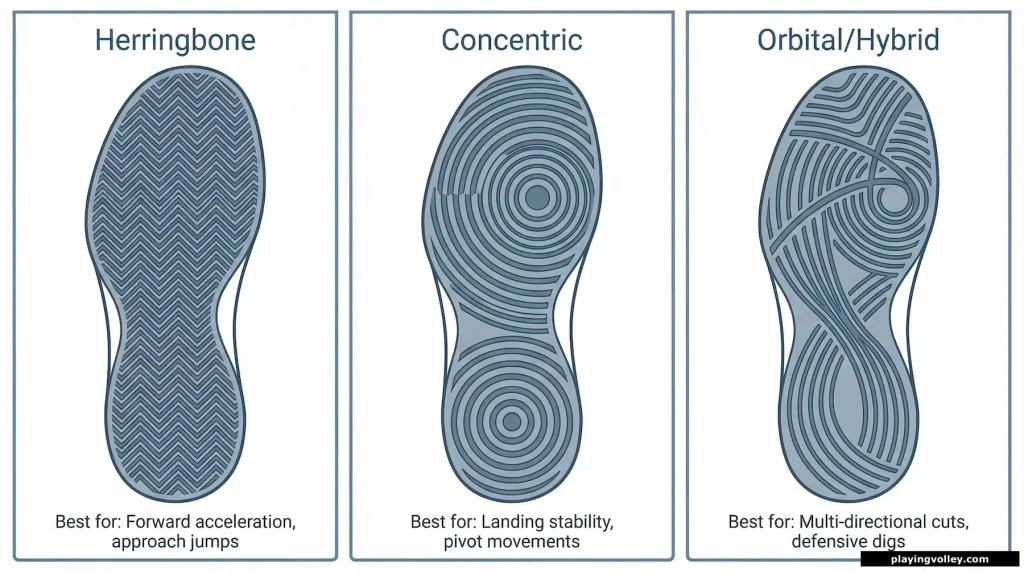
Herringbone patterns (zigzag lines) handle forward acceleration and braking – common in approach jumps. Concentric or circular patterns provide rotational grip for pivot-heavy movements like blocking footwork. Lateral zigzag grooves favor side-to-side agility for defensive shuffling. Multi-directional patterns (like the Hyperset 2’s 4-void system or the Wade 11’s orbital design) attempt to handle all movement types equally.
Clean your outsoles between sets with a damp towel. Dust buildup reduces grip faster than rubber wear does.
Here’s a quick test I learned from my college coach: on clean hardwood, good gum rubber should “chirp” when you plant and cut hard. If you’re sliding into your defensive base without a sound, either your outsoles are caked with dust or the rubber compound is worn out. Wipe them with a damp cloth mid-set, and if the silence continues, the shoe is done.
Ankle Support and Cut Height
Low-cut shoes prioritize mobility. Liberos and setters benefit from the freedom of movement. Mid-cut shoes balance support and mobility for versatile players. High-top shoes maximize ankle protection for players who repeatedly land from height – middle blockers and outside hitters.
My coach in high school was particular about this: “The shoe has to match what you actually do, not what you think you do.” A libero doesn’t need high-top support. A middle blocker jumping 40+ times per match probably does.
Cushioning Technology
GEL (ASICS), WAVE plate (Mizuno), Air Zoom (Nike), and BOOM (Li-Ning/Way of Wade) all approach the same biomechanical problem differently: absorbing landing impact and redirecting energy for the next movement. GEL feels softer and is best for shock absorption. WAVE distributes force across a wider area for stability. Air Zoom springs back for explosive transitions. BOOM provides a bouncy, responsive ride with strong impact protection.
Personal preference matters here. Try shoes on court before committing – the difference in feel affects your confidence, and confident footwork is faster footwork.
Width and Fit
Most performance volleyball shoes run narrow in the toe box. This is a deliberate design choice – a snug toe fit prevents internal sliding during cuts. If you have wide feet, your best options from this list are the Gel-Rocket 12 (which offers dedicated wide sizes) and the Way of Wade 11 (which accommodates wider feet naturally – size up if you have a high instep).
A shoe that’s too tight causes inflammation and blisters. A shoe that’s too loose lets your foot slide inside, which creates friction injuries and reduces your lateral stability. Getting the fit right matters more than any technology feature.
Budget
The functional range for quality volleyball shoes runs from $75 (Gel-Rocket 12) to $225 (Way of Wade 11). For recreational play and high school seasons, $75–$135 gives you everything you need. For competitive club and college play where you’re logging 10+ hours per week, the $130–$225 tier pays back in durability, joint protection, and performance consistency over a full season.
Knowing when your shoes are past their effective life saves you from playing on dead cushioning and worn-out traction. Most competitive players replace shoes every season.
How Long Do Volleyball Shoes Last?
A quality pair used 4–5 days per week typically lasts one full competitive season. The movement on the court tells you before the shoe looks worn. If you’re slipping on clean hardwood, the grip compound is done. If your ankles absorb more impact than usual on landings, the cushioning is compressed. Visible outsole wear at the lateral forefoot – where cutting forces hit hardest – is a reliable indicator.
Please, don’t wait for visible damage. Performance degrades well before the shoe falls apart.
FAQs
Can I play volleyball in running shoes?
For recreational play, yes. But running shoes are built for forward linear motion. They lack lateral stability for side-to-side cuts and typically don’t use non-marking rubber, which most indoor courts require. If you’re playing in any organized setting – club, school, or competitive adult league – the difference in lateral support is significant enough to affect both your performance and your ankle injury risk.
What sole material is best for volleyball?
Gum rubber outsoles are standard for indoor volleyball footwear. The rubber compound grips hardwood and synthetic court surfaces without leaving marks. The groove geometry varies by shoe and affects which movement types the sole handles best – see the outsole section above for a breakdown by pattern type.
Yes, with caveats. Basketball shoes are designed for indoor hardwood, handle lateral cuts well, and often use non-marking rubber. The main tradeoff is weight – basketball shoes are generally heavier, which affects jump efficiency and foot speed over long sessions. The Way of Wade 11 in this guide is a basketball shoe that crosses over effectively for volleyball.
General-purpose basketball shoes from brands like Nike and Jordan work for recreational volleyball. We break down the full comparison in our guide to playing volleyball in basketball shoes.
Watch for these signs: grip fading on clean court surfaces, heel cushioning that feels flat rather than springy, visible tread wear at the lateral forefoot, or new soreness in ankles or knees that started after the shoes aged.
Most competitive players replace shoes every season. Recreational players who play 1–2 times per week can get 12–18 months from a quality pair.
Ryan Walker is a former college outside hitter and volleyball coach based in Minnesota. He runs PlayingVolley.com to help players at every level understand the game better.
Keep playing, Ryan Walker