The Coach Who Couldn’t Stop Playing
The Problem that got me started PlayingVolley
Most volleyball advice online reads like it was written by someone who watched a few YouTube videos and called it research. You get generic tips that sound good but don’t work when you’re actually standing in zone 4, staring down a middle blocker who’s three inches taller than you, trying to remember whether to tool the block or swing line.
And it irritates me. I think unless you add value, don’t spread fluff.
I know because I’ve been that player. I’ve also been the coach watching a kid try to implement bad advice they found online, and it’s painful.
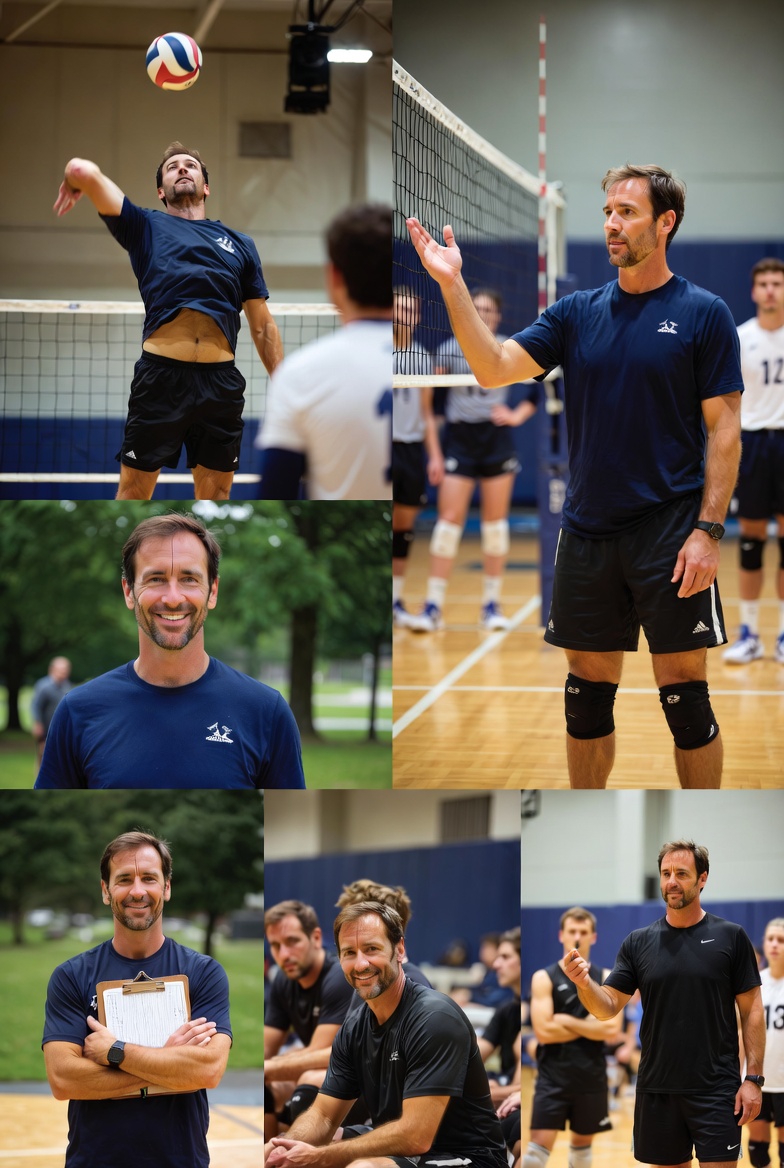
My name is Ryan Walker. I’m a 46-year-old IT network professional from Minnesota who spent the better part of two decades chasing a volleyball dream—and the last several years trying to build the resource I wish I’d had when I was learning.

Ryan in 30 Seconds:

Primary Position: Outside Hitter (Zone 4)
Specialty: Gear analysis & setter-hitter timing
Day Job: IT Network Professional
Philosophy: Efficiency over flash. Effort keeps you on the court.

Where It Started: Backyard Nets and Big Dreams
In our small Minnesota town, volleyball wasn’t just a sport. It was what we did.
My siblings and I would string up whatever we could find between two trees in our backyard—old fishing nets, clothesline, once even a bedsheet—and play until we couldn’t see the ball anymore. No refs, no rotations, no rules except one: the ball doesn’t hit the ground on your side.
Those games taught me something that coaching manuals don’t cover. Volleyball isn’t about perfect form. It’s about reading what’s coming and figuring out how to answer it. That instinct—that feel for the game—started in a backyard in Minnesota before I ever stepped on a real court.
High School: Finding My Position
Tryouts for my high school team were the first time I genuinely felt like I might throw up from nerves. I showed up early, stretched too much, and nearly shanked my first pass into the bleachers.
Coach Anderson saw something anyway. He told me later it was because I never stopped moving, never gave up on a ball. “Talent gets you on the court. Effort keeps you there.”
He put me at outside hitter—zone 4—where I’d spend the next eight years of competitive play. That pin position suited me: the pressure of being the go-to option on out-of-system balls, the responsibility of passing serve-receive on the left side, the satisfaction of terminating a set when your team needed a kill.
That first season, we weren’t good. We got exposed at the Minnesota High School Invitational, facing teams with players who’d been in club programs since middle school while most of us had learned the game in gym class. We lost in the first round. I went home and hit a ball against my garage wall for two hours.
But we got better. By junior year, we made the semifinals at the Great Lakes Regional Championship—the kind of tournament where college scouts sat in the stands and every point felt like it mattered beyond the scoreboard. The atmosphere was different than anything I’d experienced. Intense. I learned more about pressure in that weekend than in two full seasons before it.
Senior year brought the Twin Cities Volleyball Classic, where we finished runner-up, losing a five-setter to a team we’d beaten twice in the regular season. That loss taught me something important: you don’t just show up and expect results because you’ve done it before. Every match resets. Every opponent adjusts. You have to be better than you were the last time you played them.
Then came the State Championship Tournament.
We weren’t supposed to be there. We’d scraped through the bracket as a low seed, beating teams that had overlooked us. In the final, we faced a program that had won state three of the last five years. They had a middle blocker who’d already committed to a D1 school. Their setter ran a tempo offense that made our transition look slow.
We went to five sets.
I don’t remember much of the details from that match. I remember the feeling. I remember being down 12-14 in the fifth and thinking this is it, this is the last point I’ll ever play in this gym. I remember our libero digging a ball everyone thought was down. I remember the set coming to me on the left side—a high ball, outside shoulder, exactly where I wanted it—and I remember swinging without thinking.
We won 16-14.
That moment—standing on the court with my teammates, watching our coach lose his composure for the first time in four years—solidified one thing: I wasn’t ready to stop playing.
Next came college. I got a scholarship to play for a well-known team. The competition was tougher, and balancing academics and sports was challenging, but my love for volleyball kept me going. Here are a couple of notable inter-college tournaments:
National Collegiate Volleyball Championship: One of the biggest stages I ever played on. Teams from all over the country competed. We made it to the quarterfinals, and the experience was invaluable.
Intercollegiate Volleyball Tournament: An annual highlight. We reached the finals two years in a row and won in my senior year, one of my proudest moments.
One summer, our team travelled to Europe for an international tournament. Playing against international teams and experiencing different cultures was incredible. Volleyball was becoming a way of life for me.
College: Bigger Courts, Harder Lessons
The scholarship offer came from a program that had made the NCAA tournament three times in the previous decade. Playing there meant competing against athletes who were bigger, faster, and often more experienced than anyone I’d faced in Minnesota.
The adjustment was brutal.
In high school, I could get away with relying on timing and court sense. In college, everyone had court sense. Everyone had timing. The difference between playing and sitting came down to whether you’d put in the extra hours—the early morning lifts, the film sessions where coaches broke down your footwork frame by frame, the serving practice after everyone else had gone home.
I learned what real volleyball training looked like. I learned that my approach jump was two inches shorter than it needed to be and spent an entire offseason doing plyometric work until I fixed it. And, that the connection between me and my setter—that split-second read of where the ball would be before she even released it—was something you could train if you put in the reps. Nutrition mattered, that sleep mattered, that recovery wasn’t optional.
The National Collegiate Volleyball Championship was the biggest stage I’d ever played on. We made the quarterfinals my junior year, losing to a team that went on to win the whole thing. I still watch film from that match sometimes. We were outclassed, but we didn’t quit. That’s the thing I’m proudest of.
Senior year, we won the Intercollegiate Volleyball Tournament—an annual competition we’d finished runner-up in the year before. Walking off that court with the trophy felt like redemption. Like proof that the work actually mattered.
That summer, our team traveled to Europe for an international tournament. Playing against athletes from different countries, experiencing different systems and styles—rotational defenses I’d never seen, quick sets run at tempos that made our middles look slow—showed me how big volleyball really was. This wasn’t just a Midwestern sport. This was global.
I came back convinced I could make a run at playing professionally.
The Part of the Story Nobody Wants to Tell
Three months after graduation, I tore my rotator cuff.
Not during a match. Not during some dramatic moment I could point to and say “that’s where it ended.” I was in a gym doing a hitting drill I’d done a thousand times before, and something just… gave out.
The surgery went fine. The recovery didn’t.
Six months of physical therapy later, my shoulder was technically healed. But I’d lost velocity on my swing. My approach felt hesitant. The timing that had always come naturally was now something I had to think about—and when you’re thinking about your mechanics in the middle of a rally, you’ve already lost.
I tried out for two semi-pro teams. I didn’t make either roster.
That’s a hard thing to admit, even now. I’d built my identity around being a volleyball player, and suddenly I wasn’t one anymore. Or at least, not the kind I’d always imagined I’d be.
For about a year, I didn’t touch a ball. I threw myself into building a career in IT—networking, system architecture, the kind of work that had nothing to do with courts or nets or the sound of a clean kill. I was good at it. I got promoted. I told myself I’d moved on.
But you don’t spend twenty years loving something and then just stop.
Here’s the thing about that injury: it made me obsessive in a way I wasn’t before. Now when I review shoes, I’m looking at ankle support and cushioning systems because I know what it feels like when your body fails you. When I break down approach mechanics, I’m thinking about joint stress and sustainable form because I’ve lived through what happens when you ignore those details. The injury didn’t end my volleyball career—it just changed what that career looks like.
The IT Mind Meets the Volleyball Mind
As an IT network professional, I spend my days looking for single points of failure in complex systems. A misconfigured router. A bottleneck in data flow. The one weak link that brings everything down.
I realized I was doing the same thing on the volleyball court.
I don’t just look at a shoe; I look at its structural architecture—where the flex points are, how the midsole absorbs impact, whether the traction pattern actually grips on dusty courts or just looks good in photos. I don’t just watch a serve; I analyze the biomechanical sequence—the toss placement, the shoulder rotation, the contact point, and which element is most likely to break down under pressure.
This is why my reviews read differently than most volleyball content. I’m not giving you feelings. I’m giving you diagnostics. And when something doesn’t work, I’ll tell you exactly why—because that’s how I’d troubleshoot a network failure, and that’s how I approach everything on the court.
Finding a Different Way to Stay in the Game
I started coaching almost by accident.
A friend’s daughter was playing club volleyball, and the team needed an assistant coach. I said yes without really thinking about it, and within two weeks I remembered why I’d fallen in love with this sport in the first place.
It wasn’t the playing. It was the figuring it out. Watching a kid struggle with her approach and realizing she was planting her penultimate step too early. Seeing a setter’s eyes go to the wrong place before every set and working with him until he learned to look off the blockers. Taking a team that couldn’t pass a float serve in September and watching them run a 5-1 offense with first-tempo middles by February.
Over the next several years, I coached over 450 players across club, high school, and rec leagues. Some of them went on to play in college. Most of them just wanted to get better at a sport they enjoyed. Both outcomes mattered to me equally.
But coaching also showed me a problem.
The resources available to players—especially players who couldn’t afford expensive camps or private lessons—were terrible. The internet was full of volleyball content that was either too basic to be useful or so loaded with jargon that it intimidated beginners. Gear reviews were written by people who’d never played competitively. Position guides were copied from the same outdated sources everyone else was using.
I kept thinking: Someone should fix this.
Eventually, I decided to be that someone.
What PlayingVolley.com Actually Is
This site is the resource I wished existed when I was a 15-year-old kid trying to figure out whether I should play middle or outside. It’s the gear reviews I wished I had before I bought three pairs of shoes that destroyed my ankles. It’s the rules explanations I wished were available when I was coaching 14-year-olds who didn’t understand why the libero couldn’t serve in every rotation.
Here’s what you’ll find:
Position guides that go beyond the basics. Not just “the setter sets the ball”—but when to jump set versus staying grounded, how to run a shoot versus a one-ball, what front-row versus back-row actually means for your options, and why some players thrive as right-side hitters while others belong in zone 4.
Honest gear reviews from someone who’s actually played. I don’t write about shoes I haven’t worn on a court. I don’t recommend knee pads I haven’t tested in actual dives. When I say something works, it’s because I’ve used it in real conditions—not because someone paid me to say it.
Technique breakdowns with the “why” included. I’m not going to tell you to “snap your wrist” on a spike without explaining the physics of topspin, or tell you to “stay low on defense” without explaining what that actually means for your base position and reaction time.
Rules explained like a coach would explain them. No copying from the FIVB rulebook. If you want to know whether you can kick the ball, or what happens when a back-row player attacks from zone 3 in front of the attack line, or why the libero wears a different jersey—you’ll get the answer in plain English, plus the strategic context of why it matters.
Real training advice for real improvement. Vertical jump programs that work. Serving drills you can do alone. Passing routines that translate to game situations. I’ve used everything I recommend—either as a player or as a coach.
What I Actually Care About
Here’s the truth: I’m not building this site to become internet famous or to sell you a course.
I’m building it because volleyball gave me some of the best experiences of my life, and I want to make it easier for other people to have those experiences too.
I want the 14-year-old who just made JV to understand what her position actually requires—not just the physical skills, but the mental ones.
I want the parent who’s never played to be able to help their kid practice at home without feeling lost.
I want the 30-year-old who’s joining a rec league for the first time to know what gear actually matters and what’s just marketing.
I want the coach who’s volunteering because nobody else would to have access to the same information that expensive coaching clinics charge thousands for.
That’s why I built this. That’s why I keep building it.
Where to Start
If you’re new here, I’d recommend starting with one of these:
→ Volleyball Positions: The Complete Guide — This is the deep dive I wish I’d had at 15.
→ How to Spike a Volleyball — The mechanics, the timing, and the mistakes most players make
→ Court Dimensions Explained — Everything you need to know about the court, with actual measurements
→ Volleyball Drills for Beginners — Practical routines you can do at any skill level
Let’s Keep in Touch
Have a question I haven’t answered? A topic you want me to cover? A mistake you spotted in one of my articles?
Reach out: ryan81.walker@gmail.com
I read every email. I don’t always respond quickly—IT pays the bills, and this is a labor of love—but I do respond.
Keep spiking,
Ryan Walker
Outside Hitter (Retired) | Coach | Builder of PlayingVolley.com
30+
Years of experience
3K+
Games Played
450+
Players Coached